Imagine the tantalizing aroma of sizzling meats wafting through the air, each bite bursting with the umami goodness of homemade Korean BBQ sauce. This savory and slightly sweet concoction is a culinary treasure, transforming ordinary dinners into extraordinary feasts that dance on your palate with every delectable flavor.
As I recall my first taste of this magic elixir at a bustling Korean grill, I can’t help but smile. The laughter around the table, the vibrant colors of fresh ingredients, and the irresistible allure of dipping grilled delights into that rich sauce made it an unforgettable experience. Whether you’re firing up the grill for a summer barbecue or gathering family for a cozy winter night, this Korean BBQ sauce promises to elevate every occasion, turning simple gatherings into mouthwatering celebrations.
Why Is korean bbq sauce So Irresistibly Good?
Bold flavors come alive with our Korean BBQ Sauce, thanks to rich soy sauce and the perfect touch of brown sugar for sweetness. Sesame oil adds a nutty aroma that elevates your dishes. Gochujang introduces a delightful heat, while garlic and ginger provide depth. Quick prep time means you can whip this up in just 10 minutes, making it an easy go-to for weeknight meals or gatherings. Plus, it’s incredibly versatile—great as a marinade or dipping sauce!
Ingredients for korean bbq sauce
- 1/2 cup soy sauce (preferably low sodium) – This salty base adds depth and umami to your korean bbq sauce without overwhelming the flavors.
- 1/4 cup brown sugar (packed) – The brown sugar balances the saltiness with a touch of sweetness, enhancing the overall taste profile.
- 2 tablespoons sesame oil – This nutty oil provides richness and a distinctive flavor that is essential in Korean cuisine.
- 2 tablespoons rice vinegar – A splash of rice vinegar adds acidity, brightening the sauce and cutting through the richness.
- 1 tablespoon gochujang (Korean chili paste) – This spicy-sweet paste infuses the sauce with authentic heat and complexity, making it truly special.
- 1 tablespoon minced garlic – Fresh garlic lends aromatic warmth and a bold flavor that elevates your marinade or dipping sauce.
- 1 teaspoon grated ginger – Grated ginger contributes a zesty kick and fresh flavor, enhancing the overall experience of the dish.
- 1 teaspoon sesame seeds (for garnish) – Sprinkling sesame seeds adds a delightful crunch and visual appeal to your finished dish.
- 1 teaspoon green onions (chopped, for garnish) – Chopped green onions provide freshness and color, complementing the savory notes of the korean bbq sauce.
Crafting Your Unique Flavor Blend
1. Combine Ingredients: In a mixing bowl, combine 1/2 cup of soy sauce (preferably low sodium), 1/4 cup of packed brown sugar, 2 tablespoons of sesame oil, 2 tablespoons of rice vinegar, 1 tablespoon of gochujang, 1 tablespoon of minced garlic, and 1 teaspoon of grated ginger.
2. Whisk Together: Whisk together all the ingredients until the brown sugar is fully dissolved and everything is well combined. You’ll notice the rich colors blending beautifully!
3. Taste and Adjust: Taste your sauce and adjust seasoning if necessary. If you’re craving more heat, add extra gochujang; if you prefer it sweeter, stir in a bit more brown sugar.
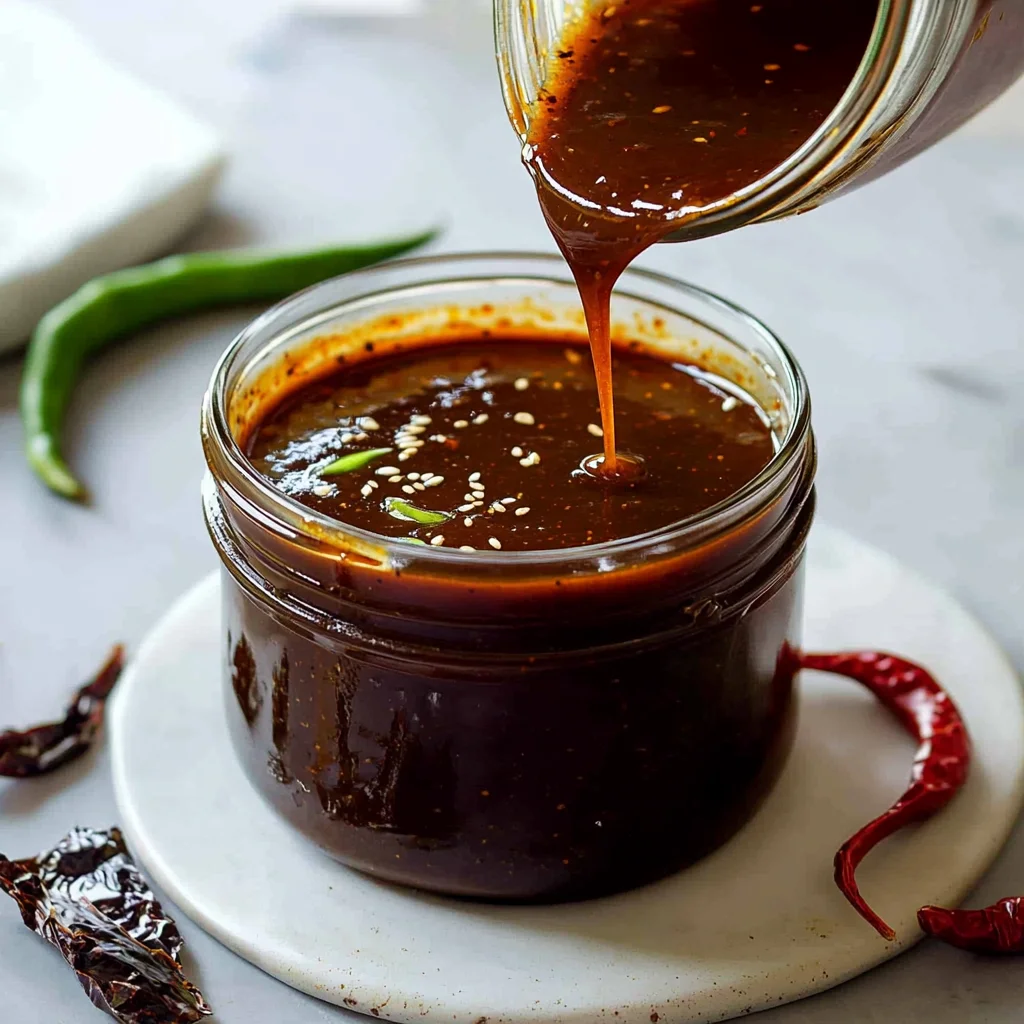
4. Garnish and Serve: Transfer your savory creation to a serving bowl and garnish with 1 teaspoon of sesame seeds and chopped green onions for that delightful finishing touch.
Optional: Drizzle with extra sesame oil for added richness.
Exact quantities are listed in the recipe card below.
Expert Tips
- Choose the Right Soy Sauce: Use low-sodium soy sauce to maintain the balanced flavor of your Korean BBQ sauce without overpowering saltiness.
- Perfect Sweetness Balance: Make sure to pack the brown sugar firmly for accurate measurements; this ensures your sauce has the right touch of sweetness.
- Gochujang Adjustments: Start with one tablespoon of gochujang, then adjust gradually; adding too much at once can make your sauce overly spicy.
- Fresh Ingredients Matter: Always use fresh minced garlic and grated ginger for maximum flavor; stale ingredients can dull the vibrant taste of your Korean BBQ sauce.
- Garnish Wisely: Don’t skip the sesame seeds and green onions; they not only enhance presentation but also add a delightful crunch and freshness.
Storing and Freezing Tips for Sauces

- Fridge: Store your korean bbq sauce in an airtight container for up to 2 weeks. This keeps the flavors vibrant and fresh, perfect for dipping or marinating.
- Freezer: If you want to make a larger batch, freeze the sauce in ice cube trays. Once frozen, transfer cubes to a freezer bag for up to 3 months.
- Thawing: When ready to use frozen sauce, simply thaw it in the fridge overnight or microwave it in short bursts until warm.
- Garnish Storage: Keep sesame seeds and chopped green onions separate until serving to maintain their crunch and freshness.
Personalizing Your Gourmet Condiment
Feel free to get creative with this delightful recipe and make it uniquely yours!
- Gluten-Free: Substitute soy sauce with tamari or coconut aminos for a gluten-free option without sacrificing flavor. This swap ensures everyone at the table can enjoy your delicious creation.
- Sweet and Spicy: Add an extra tablespoon of gochujang for a bolder kick if you love a heat that lingers. This twist takes your sauce from savory to fiery, perfect for those who crave adventure.
- Citrusy Zest: Incorporate the juice of half an orange or lemon for a refreshing twist that brightens the flavors. The citrus notes will add a lively brightness, balancing the sweetness beautifully.
- Smoky Depth: Mix in a teaspoon of smoked paprika or chipotle powder for a smoky finish that enhances grilled meats. This variation adds complexity and transforms your dish into a barbecue masterpiece.
- Herbaceous Touch: Experiment by adding chopped fresh cilantro or basil for an aromatic finish that elevates the whole experience. Fresh herbs introduce lovely layers of flavor, making each bite more vibrant.
- Honey Sweetness: Swap brown sugar for honey or maple syrup to create a more complex sweetness with floral notes. This change not only alters the taste but also adds a lovely gloss to your sauce.
- Nutty Flavor: Introduce 1 tablespoon of peanut butter or tahini for a creamy richness that pairs wonderfully with grilled dishes. The nutty undertones will provide an unexpected yet delightful surprise in every bite.
Make Ahead Options
Preparing this delightful korean bbq sauce is a fantastic option for meal prep enthusiasts! You can easily combine the main ingredients, like 1/2 cup of low sodium soy sauce, 1/4 cup of packed brown sugar, and 2 tablespoons of sesame oil in advance. In fact, once you’ve whisked together all the components—such as the rice vinegar, gochujang, minced garlic, and grated ginger—this sauce can be made up to 3 days ahead of time. Just remember to adjust the seasoning to your liking before storing it in an airtight container in the fridge. When you’re ready to serve, simply transfer it to a bowl and garnish with sesame seeds and chopped green onions for that fresh touch. This way, you’ll not only save time but also savor every bite of your juicy meats marinated in this irresistible korean bbq sauce!
Frequently Asked Questions About this Condiment
Can I use regular soy sauce instead of low sodium?
While you can use regular soy sauce, opting for low sodium helps control the overall saltiness of the sauce, allowing the sweet and spicy flavors to shine through. If you’re using regular soy sauce, consider reducing the amount slightly or balancing it with a bit more brown sugar to maintain that savory-sweet harmony.
How should I store leftover korean bbq sauce?
Store your homemade korean bbq sauce in an airtight container in the refrigerator. It keeps well for about 10 days. Just give it a good stir before using it again, as some ingredients may settle over time.
Can I freeze this sauce for later use?
Absolutely! You can freeze your korean bbq sauce in a freezer-safe container for up to 3 months. To use, simply thaw it in the fridge overnight and give it a quick whisk before enjoying it again. This is a great way to have delicious flavors ready at your convenience.
What can I substitute for gochujang if I can’t find it?
If gochujang isn’t available, you can create a similar flavor profile by mixing equal parts of red chili paste or sriracha with a bit of miso paste or honey for sweetness. While the taste will vary slightly, this alternative will still provide some heat and depth to your sauce.
How do I adjust the sweetness of my sauce?
If you find that your korean bbq sauce isn’t sweet enough, it’s easy to adjust! Simply add more brown sugar, one tablespoon at a time, whisking thoroughly after each addition until you reach your desired level of sweetness. Remember, balance is key—too much sugar might overshadow the other wonderful flavors!
What is a good serving size for this sauce?
This recipe yields about 4 servings, with each serving containing approximately 80 calories. It’s perfect as a marinade for meats or served alongside grilled veggies or dumplings. Adjust accordingly based on how much you’d like to enjoy this deliciously versatile sauce!
Korean BBQ Sauce
Ingredients
Method
- In a mixing bowl, combine soy sauce, brown sugar, sesame oil, rice vinegar, gochujang, minced garlic, and grated ginger.
- Whisk together until the brown sugar is fully dissolved and all ingredients are well combined.
- Taste and adjust seasoning if necessary, adding more gochujang for heat or sugar for sweetness.
- Transfer to a serving bowl and garnish with sesame seeds and chopped green onions.