Imagine biting into a plate of Greek Asparagus Salad, where the crispness of tender asparagus meets the juiciness of ripe tomatoes, creating an explosion of flavors that dances on your palate. The briny olives and creamy feta cheese add layers of texture and taste, all brought together with a zesty lemon-olive oil vinaigrette that sings of summer sunshine and Mediterranean breezes.
This salad isn’t just a dish; it’s a celebration of fresh ingredients, perfect for warm gatherings or a light lunch on a lazy afternoon. I still remember the first time I tasted it at a sun-drenched picnic, where laughter mingled with the aroma of herbs and citrus, making every bite feel like a joyful memory in the making. Get ready to dive into this delightful recipe that promises to brighten any occasion!
Why Will You Keep Making Greek Asparagus Salad?
Fresh asparagus adds a delightful crunch and vibrant green color, making this salad visually stunning. Juicy cherry tomatoes bring a burst of sweetness, perfectly balancing the savory feta cheese. Tangy kalamata olives provide a Mediterranean flair, while the red onion adds a subtle kick. Wholesome ingredients come together in just 15 minutes, making it an ideal choice for busy weeknights or gatherings. Enjoy its versatility as a side dish or a light main course that everyone will adore!
Greek Asparagus Salad Ingredients
- 1 bunch asparagus (trimmed and cut into 2-inch pieces) – Fresh asparagus brings a tender crunch and vibrant color to your Greek Asparagus Salad.
- 1 cup cherry tomatoes (halved) – Sweet cherry tomatoes add a burst of flavor and juiciness to the dish.
- 1/2 cup kalamata olives (pitted and halved) – These rich, briny olives provide a delightful contrast to the fresh ingredients.
- 1/2 cup feta cheese (crumbled) – Creamy feta cheese adds a tangy richness that perfectly complements the salad’s flavors.
- 1/4 cup red onion (thinly sliced) – Sliced red onion introduces a mild sharpness that enhances the overall taste profile.
Dressing:
- 3 tablespoons extra virgin olive oil – High-quality olive oil is essential for a flavorful vinaigrette that ties the salad together.
- 2 tablespoons lemon juice (freshly squeezed) – Fresh lemon juice brightens the dish with zesty acidity, balancing the richness of the feta.
- 1 teaspoon dijon mustard – Dijon mustard adds depth and creaminess to the dressing while helping emulsify it.
- 1 clove garlic (minced) – Minced garlic infuses the dressing with aromatic warmth and enhances its overall flavor.
- salt to taste – Seasoning with salt helps elevate all the flavors in your Greek Asparagus Salad.
- pepper to taste – A sprinkle of pepper adds just the right amount of warmth and spice to complement the dressing.
A Comprehensive Guide to Salad Preparation
1. Combine Ingredients: In a large mixing bowl, combine the freshly trimmed and cut 2-inch pieces of asparagus, halved cherry tomatoes, pitted and halved kalamata olives, crumbled feta cheese, and thinly sliced red onion for a colorful base.
2. Make the Dressing: In a small bowl, whisk together 3 tablespoons of extra virgin olive oil, 2 tablespoons of freshly squeezed lemon juice, 1 teaspoon of dijon mustard, minced garlic, and season with salt and pepper to your liking until the dressing is well combined.
3. Toss Together: Pour the vibrant dressing over the salad mixture and toss gently to combine all those delicious flavors. Serve immediately for the best taste and texture!
Optional: Garnish with extra feta or fresh herbs for added flavor.
Exact quantities are listed in the recipe card below.
Expert Tricks for a Flavorful Salad
- Asparagus Prep: Make sure to trim the tough ends of the asparagus before cutting them into pieces. This ensures every bite is tender and enjoyable.
- Tomato Selection: Use ripe cherry tomatoes for a burst of sweetness. Overripe or underripe tomatoes can alter the salad’s flavor profile significantly.
- Olive Quality: Opt for high-quality kalamata olives. Their rich, briny taste enhances the overall flavor and authenticity of your Greek Asparagus Salad.
- Feta Freshness: Choose crumbly feta cheese rather than pre-packaged blocks for a creamier texture that complements the other ingredients perfectly.
- Dressing Balance: Adjust lemon juice and mustard to your taste; too much acidity can overpower delicate flavors, so start with less and add more if needed.
- Serve Promptly: Toss the salad right before serving to keep the asparagus crisp and vibrant; letting it sit too long can make it soggy.
Best Practices for Salad Storage and Freezing
- Fridge: Store the Greek Asparagus Salad in an airtight container for up to 3 days. Keep the dressing separate until ready to serve for the best texture.
- Freezer: It’s not recommended to freeze this salad due to the delicate textures of asparagus and feta, which can become mushy after thawing.
- Preparation: If preparing ahead, consider chopping fresh ingredients just before serving to maintain their vibrant flavors and crunchiness.
- Reheating: This salad is best served cold. If you prefer it warm, lightly sauté asparagus before adding other ingredients, but enjoy it fresh for the best experience!
Customize Your Salad to Suit Your Taste
Feel free to play with this delightful salad, making it your own with these exciting twists and swaps!
- Grain Boost: Add cooked quinoa or farro for a hearty touch. This not only enhances the texture but also makes the salad more filling, perfect for a light lunch or dinner.
- Cheese Options: Swap feta for goat cheese or mozzarella. Each cheese brings its unique creaminess and flavor, allowing you to customize the taste profile to suit your mood.
- Herb Infusion: Toss in fresh herbs like basil or dill for an aromatic lift. The addition of fresh herbs can brighten each bite, adding layers of flavor that elevate the entire dish.
- Nutty Crunch: Sprinkle toasted pine nuts or walnuts on top. This adds a satisfying crunch that contrasts beautifully with the tender asparagus while introducing nutty notes.
- Spicy Kick: Incorporate sliced jalapeños or red pepper flakes if you enjoy some heat. A dash of spice can take this refreshing salad to new heights, tantalizing your taste buds with each forkful.
- Veggie Variation: Mix in other seasonal vegetables such as bell peppers or cucumbers. This not only adds color but also introduces varying textures and flavors, making every bite an adventure.
- Vegan Delight: Substitute feta with tofu or avocado for a creamy alternative. This keeps the salad lush and satisfying while catering to plant-based diets without sacrificing flavor.
Make Ahead Options
This Greek Asparagus Salad is perfect for meal prep, allowing you to enjoy its vibrant flavors throughout the week. You can prepare the asparagus, cherry tomatoes, kalamata olives, feta cheese, and red onion up to 3 days in advance; simply store them in an airtight container in the refrigerator. For the dressing, whisk together the olive oil, lemon juice, dijon mustard, minced garlic, salt, and pepper and keep it separate for up to 1 week. When you’re ready to serve, simply combine everything in a large bowl and toss with the dressing. This way, you maintain the salad’s freshness and crunch while saving precious time during busy days! Enjoy this refreshing dish whenever your heart desires!
Common Questions About This Recipe Answered
What type of asparagus should I use for this salad?
When selecting asparagus, look for firm, bright green stalks with tightly closed tips. Thin spears are more tender and ideal for raw preparations like this salad. If using thicker spears, you may want to blanch them briefly in boiling water to soften their texture.
How can I store leftovers of the Greek Asparagus Salad?
To store any leftover salad, place it in an airtight container in the refrigerator. The salad is best enjoyed fresh but can be kept for up to 2 days. Keep the dressing separate if possible to prevent the ingredients from becoming soggy.
Can I freeze Greek Asparagus Salad?
Freezing is not recommended for this salad, as the fresh vegetables will lose their crispness and texture. Ingredients like feta cheese and olives do not freeze well either. It’s best to enjoy this dish fresh, as it takes only 15 minutes to prepare!
How many servings does this recipe yield?
This Greek Asparagus Salad recipe serves 4 people generously. Each serving is around 150 calories, making it a light and refreshing option for lunch or as a side dish during dinner.
What can I substitute for feta cheese in this salad?
If you’re looking for a dairy-free alternative, try using crumbled tofu marinated in lemon juice and herbs to replicate that tangy flavor. For a lower-fat option, consider using goat cheese or even avocado slices for creaminess without the cheese.
How can I make the dressing more flavorful?
To amp up the flavor of your vinaigrette, consider adding fresh herbs like basil or parsley; they pair beautifully with the other ingredients! You could also include a pinch of red pepper flakes for a bit of heat or swap out the dijon mustard for whole-grain mustard for extra texture and depth.
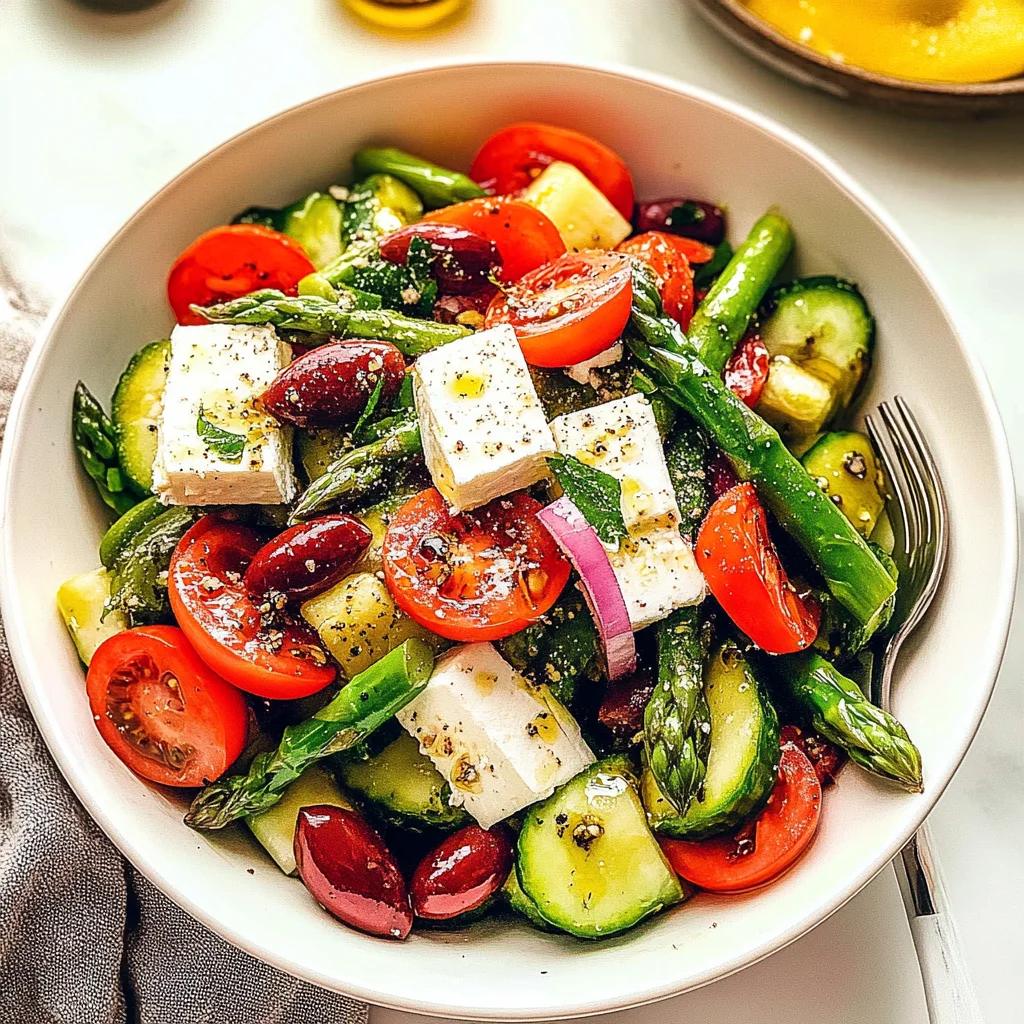
Greek Asparagus Salad
Ingredients
Method
- In a large mixing bowl, combine the asparagus, cherry tomatoes, kalamata olives, feta cheese, and red onion.
- In a small bowl, whisk together the olive oil, lemon juice, dijon mustard, minced garlic, salt, and pepper until well combined.
- Pour the dressing over the salad and toss gently to combine. Serve immediately.