Kimchi is a delightful dish that brings a burst of flavor and excitement to any meal. Its crunchy texture, spicy kick, and tangy aroma can make even the dullest dinner feel like a party. Imagine the first taste—your mouth awakens with bold flavors that dance together in harmony. refreshing dill pickle salad You might find yourself chuckling as you realize you just devoured half the jar in one sitting.
This kimchi recipe holds a special place in my heart, reminding me of family gatherings where laughter mingled with the fragrant scent of fermentation wafting through the air. It’s perfect for cozy nights in or as a zesty side at barbecues. making sushi rice Whether you’re an adventurous foodie or just someone looking to spice up your meals, this recipe is sure to tantalize your taste buds!
Why You'll Love This Recipe
- This kimchi recipe is easy to prepare, making it accessible for both novice and seasoned cooks.
- The distinct blend of flavors keeps your taste buds entertained and coming back for more.
- Visually appealing with its vibrant colors, this dish adds flair to any meal.
- Use it as a side, topping, or main ingredient—its versatility knows no bounds!
Ingredients for kimchi recipe
For more inspiration, check out this Amish Country Casserole Recipe recipe.
Here’s what you’ll need to make this delicious dish:
- Napa Cabbage: This leafy green serves as the base for your kimchi; go for fresh, crisp heads for the best crunch.
- Coarse Sea Salt: Essential for drawing moisture from the cabbage and creating that signature brine.
- Korean Red Pepper Flakes (Gochugaru): These provide authentic heat and color; adjust based on your spice preference!
- Garlic: Fresh garlic cloves will add depth and richness; don’t skimp on them!
- Ginger: A small piece adds a subtle warmth that complements the other flavors perfectly.
- Fish Sauce: Adds umami and depth; use it sparingly if you’re hesitant about seafood flavors. For more inspiration, check out this Garlic Butter Lobster Tail recipe.
- Green Onions: These provide a crisp bite and fresh flavor that balances out the tanginess.
For the optional ingredients:
- Carrots: Thinly sliced carrots add color and natural sweetness to your kimchi; they also give it extra crunch.
The full ingredients list, including measurements, is provided in the recipe card directly below.

How to Make kimchi recipe
Follow these simple steps to prepare this delicious dish:
Step 1: Prepare the Cabbage
Begin by slicing your napa cabbage into quarters lengthwise and removing the core. Cut each quarter into bite-sized pieces. In a large bowl, sprinkle coarse sea salt over the cabbage, tossing it gently until every piece is coated. Let it sit for about two hours, turning occasionally until it wilts down nicely.
Step 2: Rinse and Drain
Once the cabbage has wilted, rinse it under cold water to remove excess salt. Drain thoroughly in a colander—you want all that water gone!
Step 3: Make the Kimchi Paste
In a food processor or blender, combine garlic cloves, ginger, fish sauce, and gochugaru. Blend until you achieve a thick paste. If you’re feeling adventurous, throw in some sugar for an extra layer of flavor!
Step 4: Mix in Vegetables
In a large mixing bowl, combine your drained cabbage with chopped green onions and shredded carrots if using. Add the kimchi paste from Step 3 and mix everything together using gloved hands (trust me; you’ll want gloves unless you enjoy spicy fingers).
Step 5: Pack into Jars
Transfer your mixture into clean glass jars. Press down firmly to eliminate air pockets while leaving some space at the top—about an inch should do! Seal them tightly but not too tight; fermentation needs room to breathe.
Step 6: Ferment
Leave your jars at room temperature away from direct sunlight for about one to five days depending on how tangy you like your kimchi. Check daily; once it’s reached your desired flavor profile, move it to the fridge where it can last for months (if you can resist eating it all!).
Transfer to plates and share with friends or keep all to yourself—no judgment here! Enjoy this vibrant dish on its own or as an incredible topping on rice bowls or tacos.
With these simple steps, you’ll have homemade kimchi ready to tantalize those taste buds!
You Must Know
- This delightful kimchi recipe is not just about fermentation; it’s about creating a flavor explosion in your mouth.
- You can easily adjust the spice levels to suit your taste.
- Perfect for adding zing to any dish or enjoying straight from the jar!
Perfecting the Cooking Process
To achieve the best kimchi, start by prepping your vegetables first. Chop and salt them while allowing them to release moisture. Then, make the spicy paste with garlic, ginger, and gochugaru before mixing everything together for maximum flavor infusion.
Add Your Touch
Feel free to customize this kimchi recipe! Swap napa cabbage for radishes or add carrots for extra crunch. Experiment with different spices or even add fruits like pear for a sweet twist that makes your taste buds dance.
Storing & Reheating
Store your homemade kimchi in an airtight container in the fridge. It can last up to three months, but trust me, it won’t last that long! Enjoy it cold straight from the jar or warm it slightly in dishes.
Chef's Helpful Tips
- Use fresh vegetables for better texture and flavor.
- Don’t skip the salting step; it helps draw out excess moisture.
- Taste as you go; adjusting spices will make your kimchi uniquely yours.
Sometimes I think my friends like my kimchi more than me! One taste led to requests for jars at every gathering, proving that sharing really is caring (especially when it comes to fermented goodness).
FAQs :
What is the best type of cabbage for a kimchi recipe?
When choosing cabbage for your kimchi recipe, Napa cabbage is the most popular option. Its tender leaves and mild flavor absorb the spices beautifully. However, you can also use regular green cabbage if Napa is not available. The key is to ensure that the cabbage has a good texture and can hold up during fermentation. For a twist, consider adding other vegetables, such as radishes or cucumbers, to enhance your kimchi’s flavor profile.
How long does homemade kimchi last?
Homemade kimchi typically lasts about 3 to 6 months when stored in the refrigerator. The fermentation process continues even after sealing it in a jar, which means the flavors will deepen over time. However, the texture may soften as it ages. To maximize freshness, keep an eye on its smell and taste; if it becomes overly pungent or sour for your liking, it might be time to use it in cooked dishes instead.
Can I make a vegan kimchi recipe?
Absolutely! A vegan kimchi recipe is easy to create by omitting fish sauce or shrimp paste commonly found in traditional versions. Instead, you can substitute these ingredients with soy sauce or miso paste for umami flavor. sweet and tangy BBQ sauce Many people also enjoy using seaweed flakes to add depth to their vegan kimchi. Experiment with different vegetables and seasonings to find your perfect balance while keeping it plant-based.
What are some common mistakes when making kimchi?
One common mistake when preparing a kimchi recipe is not salting the cabbage properly before fermentation. Salting draws out excess moisture and helps maintain crunchiness during fermentation. Another mistake is neglecting hygiene; always ensure that you use clean utensils and containers to prevent unwanted bacteria from spoiling your batch. Lastly, many individuals underestimate the importance of temperature; fermenting at too high or low temperatures can affect the final product’s flavor.
Conclusion for kimchi recipe :
In summary, creating a delicious kimchi recipe requires attention to detail and patience during fermentation. Choosing the right ingredients like Napa cabbage enhances the overall flavor while maintaining texture. Remember that homemade kimchi lasts several months in the refrigerator, making it a versatile side dish or ingredient in various meals. delicious egg roll bowl Whether you opt for traditional or vegan variations, your homemade kimchi will surely impress family and friends alike! Enjoy experimenting with flavors and share this beloved dish with others!
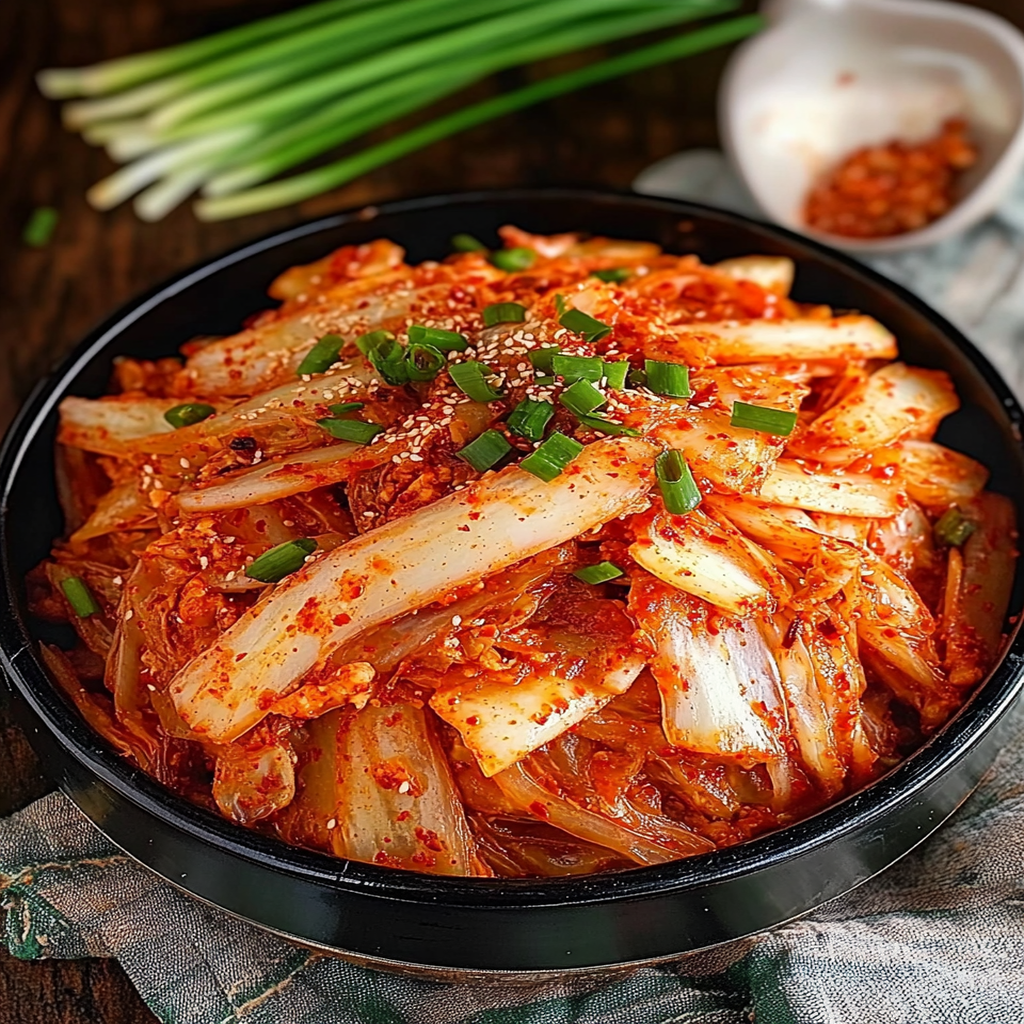
Kimchi
Ingredients
Method
- Prepare the Cabbage: Slice the Napa cabbage into quarters, remove the core, and cut into bite-sized pieces. Place in a large bowl and sprinkle with salt; toss to coat. Let sit for about 2 hours.
- Rinse and Drain: Rinse the wilted cabbage under cold water and drain thoroughly.
- Make the Kimchi Paste: In a blender, combine garlic, ginger, fish sauce, and gochugaru; blend until you achieve a thick paste.
- Mix in Vegetables: Combine drained cabbage with chopped green onions and carrots (if using). Add kimchi paste and mix using gloved hands.
- Pack into Jars: Transfer the mixture to clean glass jars, pressing down to remove air pockets while leaving space at the top.
- Ferment: Leave jars at room temperature away from sunlight for 1-5 days until desired tanginess is achieved, then refrigerate.